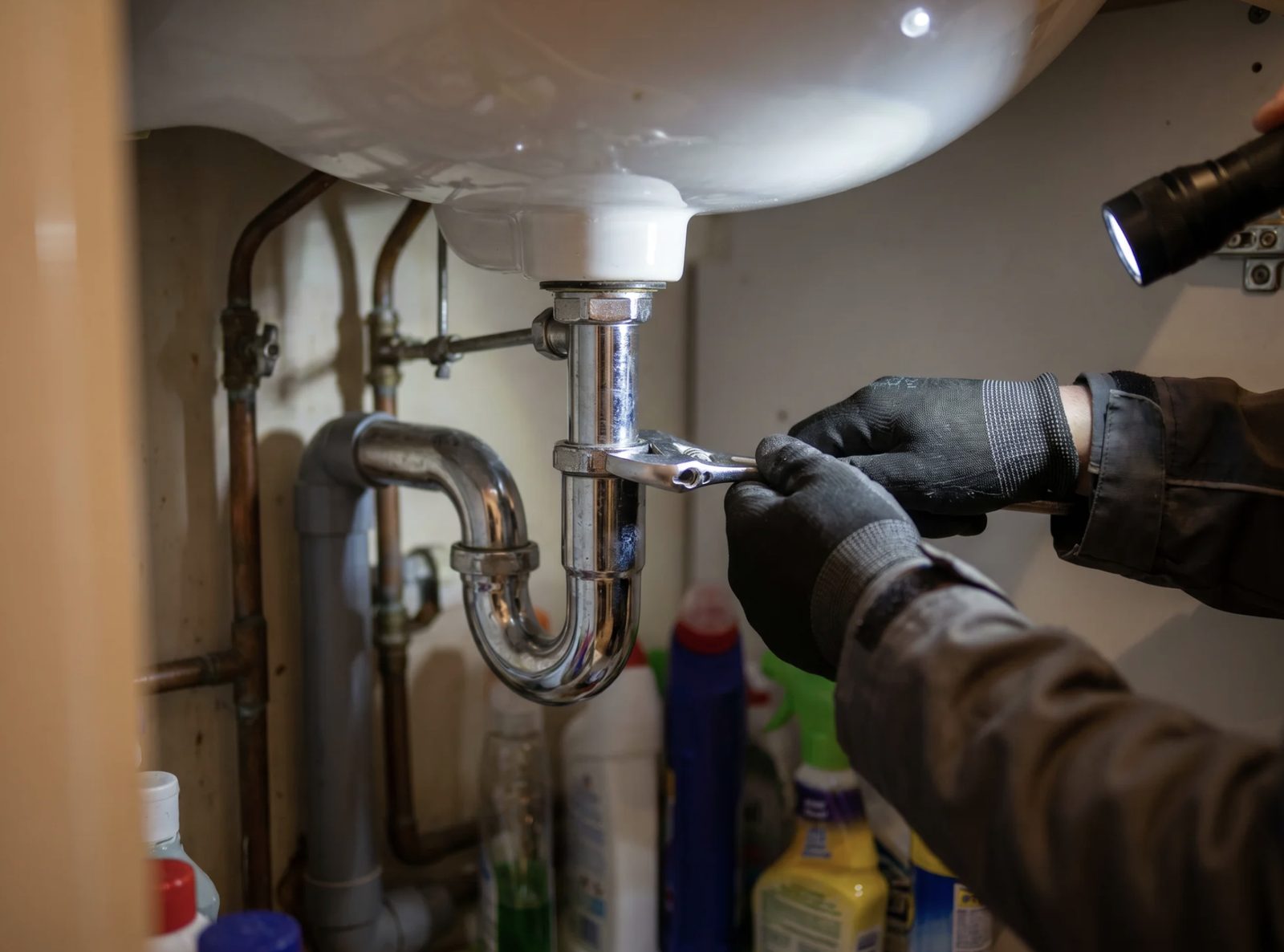
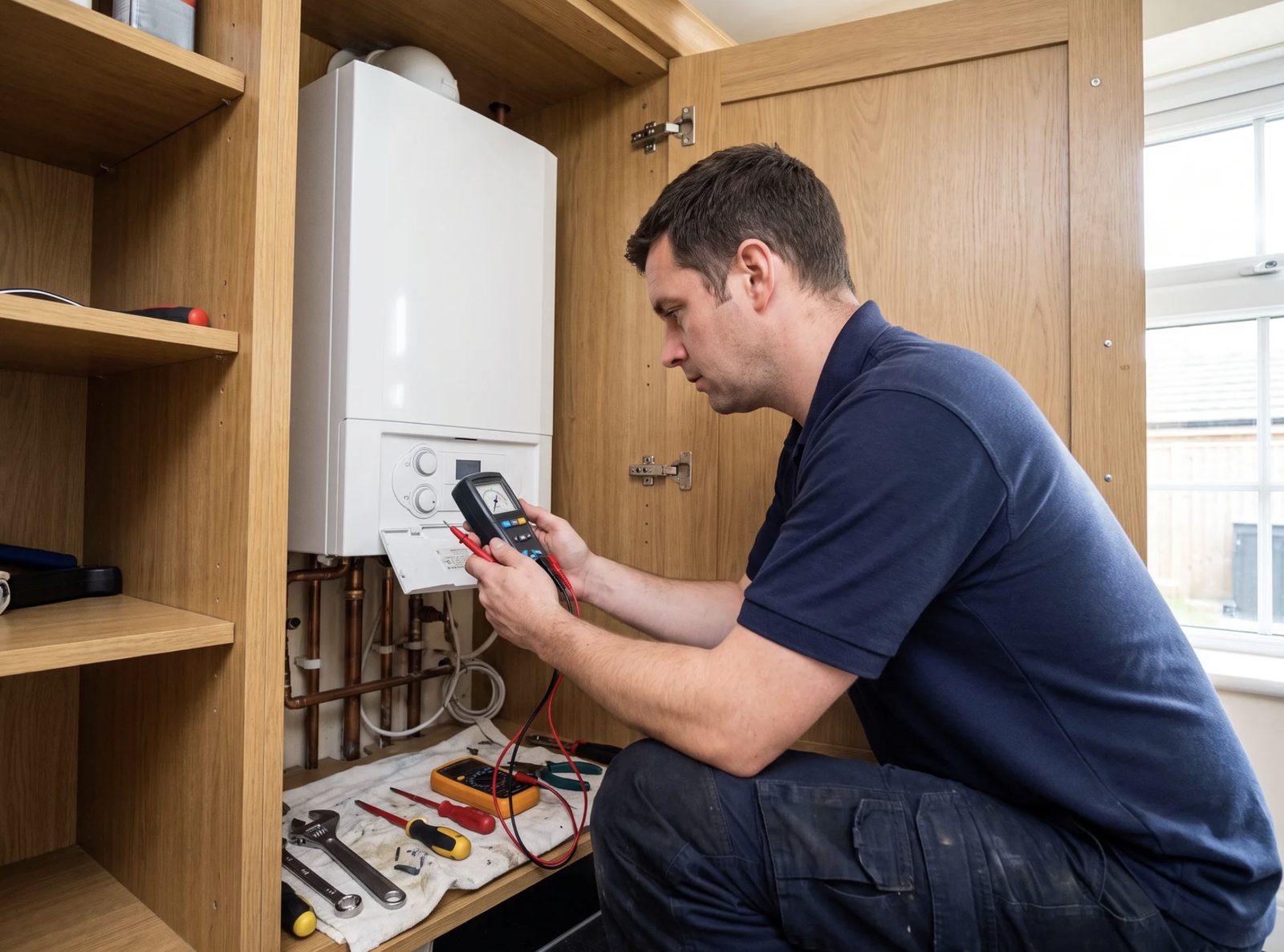
Here's the counterintuitive truth about frozen pipes: the danger moment isn't when they freeze — it's when they thaw. Ice expands and stresses the pipe; the split often only reveals itself when the water starts moving again. Handle the thaw properly and you may escape with no damage at all.
Cold snap, no water from one tap, pipes visibly frosted in the loft? Here's the exact sequence.
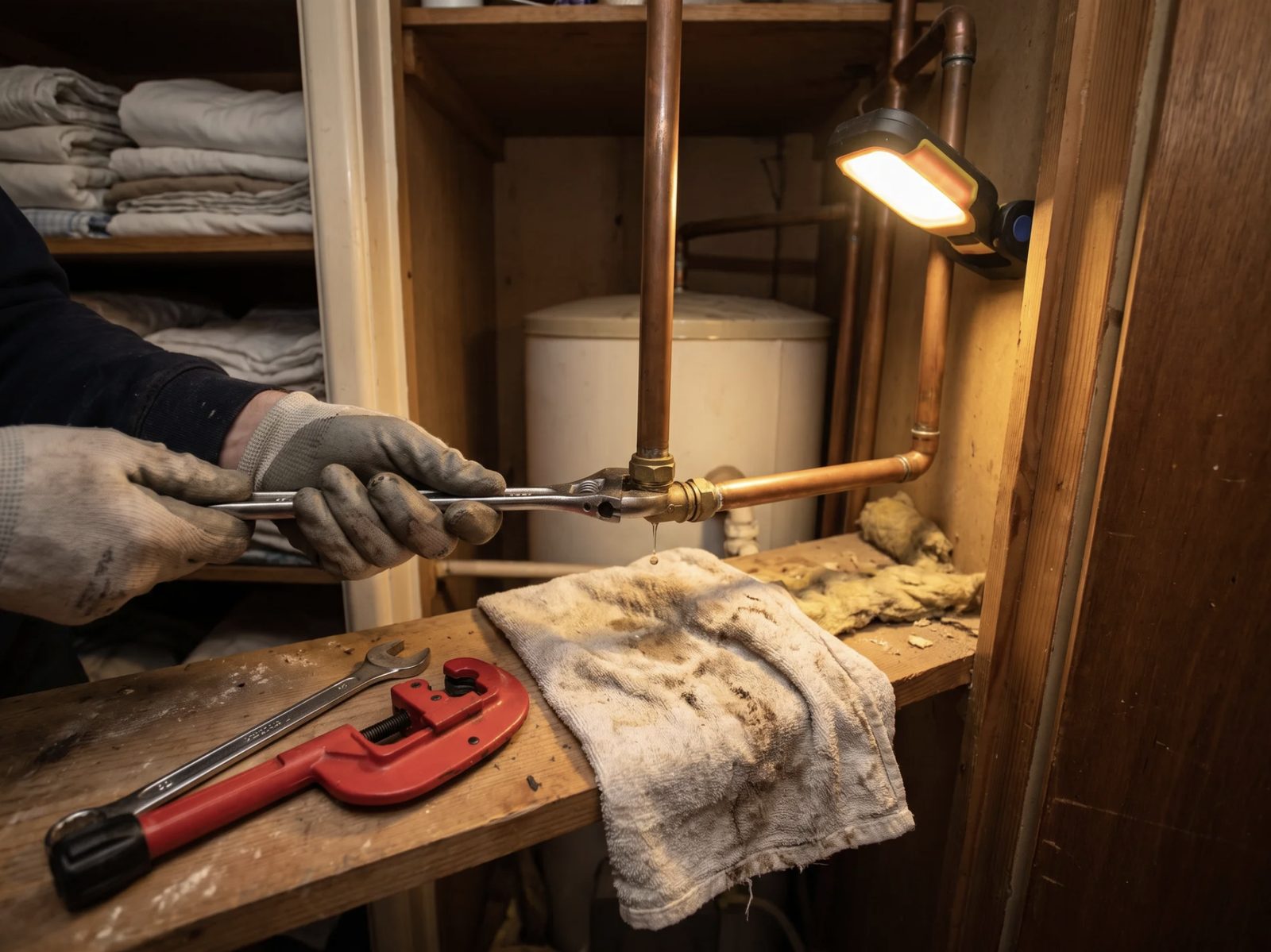
Step 1: Turn off the stopcock
Before thawing anything, shut off the mains stopcock. If the pipe has split inside the ice, this stops a flood the moment it melts. Then open the affected tap (and nearby taps) — this relieves pressure and gives melting water somewhere to go.
Step 2: Find the frozen section
Work backwards from the dead tap. Frozen sections are usually where pipes run through unheated spaces: lofts, garages, under floors, outside walls, or near airbricks. Frost on the pipe, a slight bulge, or a section that feels dramatically colder are the giveaways.
Step 3: Thaw gently
Use a hairdryer on a low setting, warm (not boiling) towels, or a hot water bottle wrapped against the pipe. Start from the tap end and work back toward the frozen section, so meltwater can escape. Warming the whole room with the heating on helps too. Patience is the technique — this takes time.
What never to do
Never use a blowtorch, heat gun on high, or any naked flame — you'll damage the pipe, risk fire, and can flash-boil water inside the pipe causing it to burst violently. Don't crank a boiler onto maximum to 'push through' a frozen heating pipe. And don't leave a thawing pipe unattended: if it's split, you want to be there when it shows.
Stop it happening again
Lag every pipe in unheated spaces — foam lagging costs pennies per metre. Insulate outside taps or fit isolation valves so they can be drained for winter. During hard frosts, keep the heating on low even when you're away, and open the loft hatch to let warm air circulate. If you're away for long periods in winter, consider draining the system entirely.