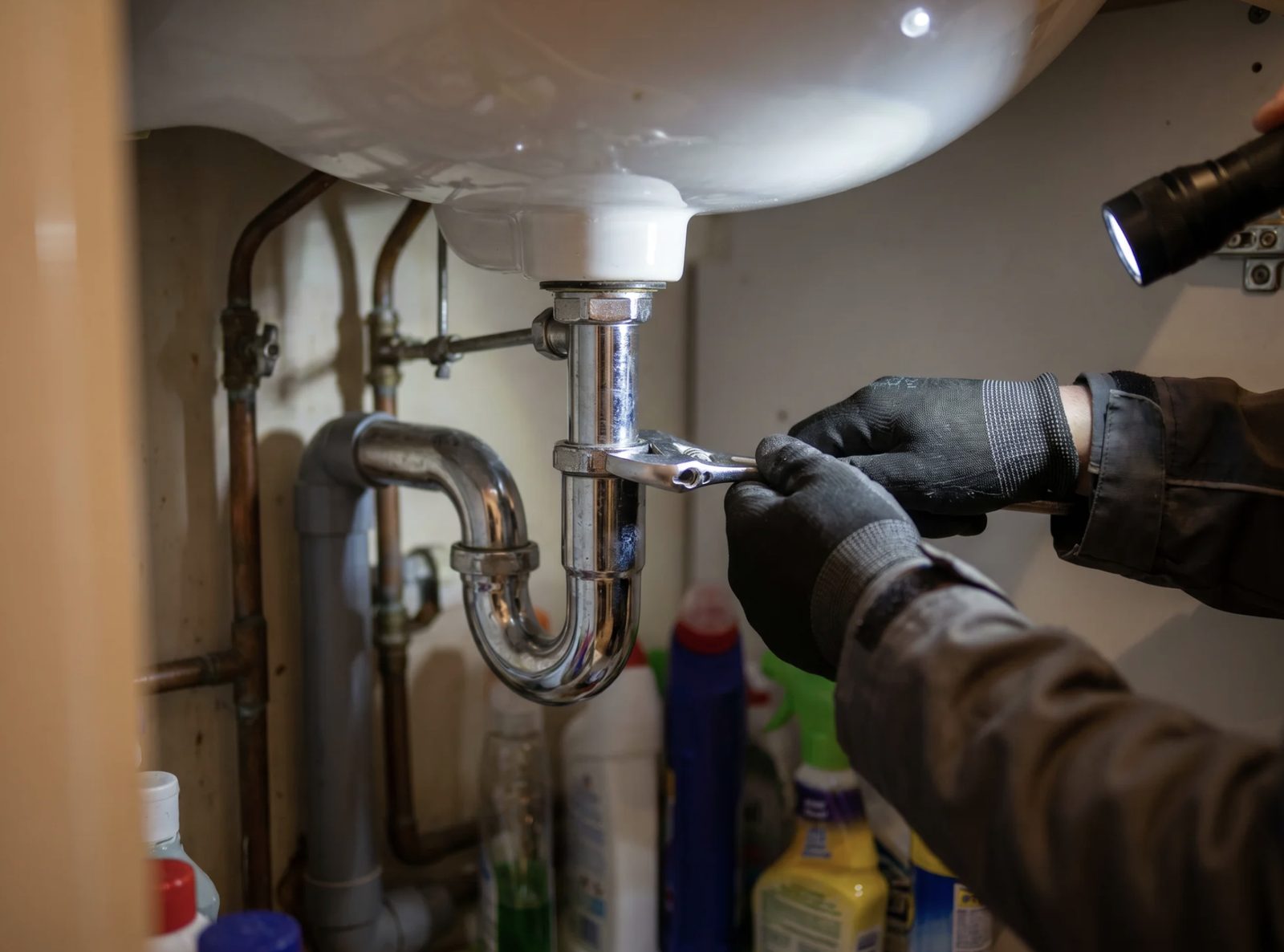
When a pipe bursts, water escapes at up to 400 litres an hour. The difference between a mop-up and a ruined ceiling is usually one thing: how fast someone turned off the stopcock. Yet most people have never checked where theirs is — and a worrying number find, mid-emergency, that it's seized solid.
Two minutes today. Here's where to look and what to check.
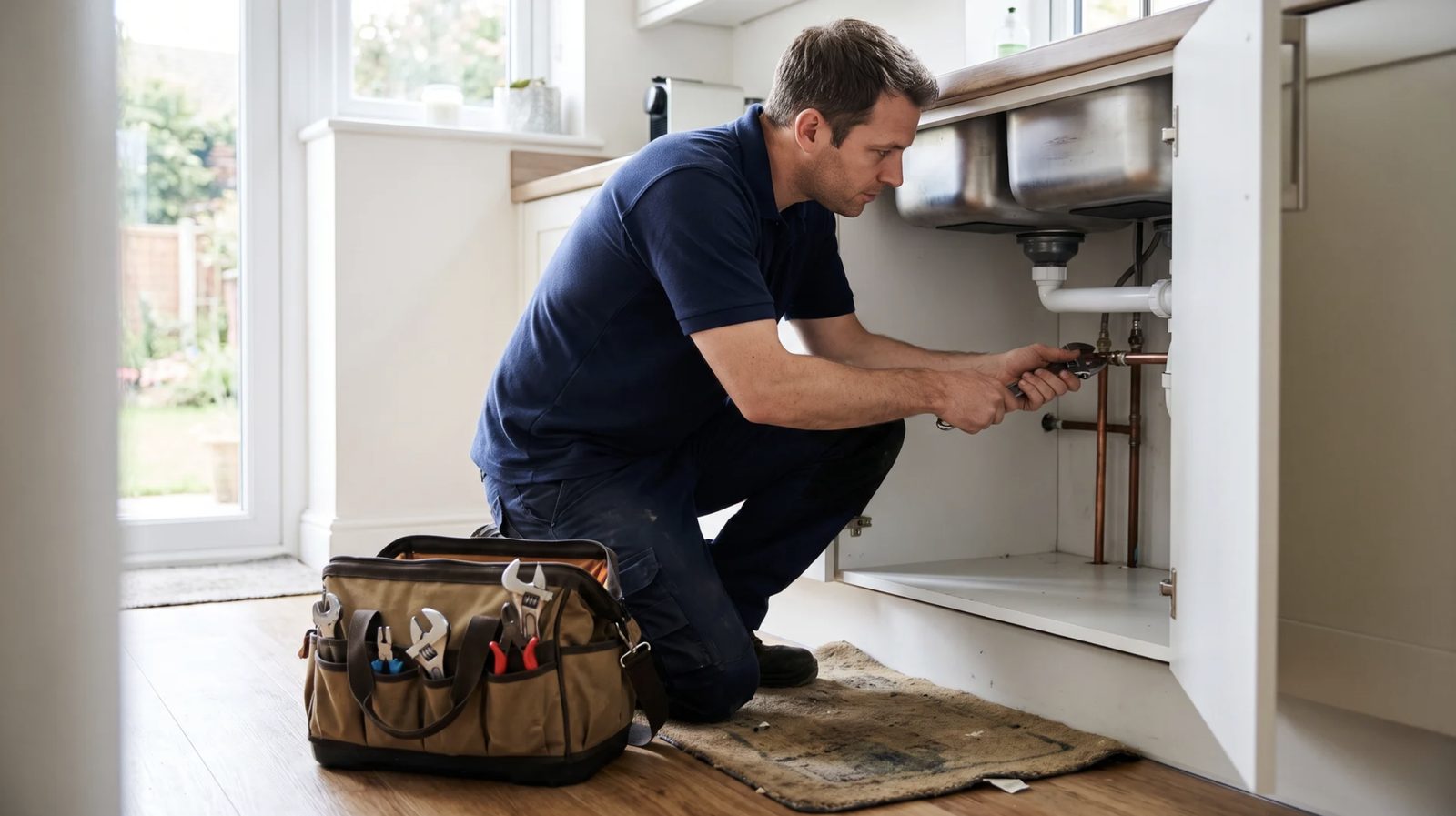
The most common locations in UK homes
Under the kitchen sink is the classic spot — look at the back of the cupboard where the cold pipe rises. Other common places: under the stairs, in a downstairs toilet or bathroom, in a utility room, in the garage where the mains enters, or under floorboards near the front door in older houses. Flats often have theirs near the boiler, in a service cupboard, or in a communal riser.
The outside stop valve
There's usually a second valve at the property boundary, under a small metal or plastic cover in the pavement or driveway marked 'W' or 'Water'. It may need a long stopcock key (cheap from any DIY shop). This shuts off everything — useful if the internal stopcock fails or the leak is on the supply pipe itself.
Test it today — seriously
Find your stopcock and turn it fully off, then on again. If it turns freely, you're prepared. If it's stiff, work it gently back and forth — decades of sitting untouched makes them seize. Never force a seized stopcock: the spindle can shear off, causing the very flood it exists to prevent. A little penetrating oil and patience, or a call to us.
Upgrade a tired stopcock
Old crutch-head stopcocks that take five stiff turns can be replaced with modern quarter-turn lever valves — off in one second, even for a child or an elderly relative. It's a quick job, and in an emergency that second matters. While we're there, we'll label it so everyone in the house knows where it is.