A toilet that runs constantly — trickling into the pan, hissing in the cistern, or refilling itself every few minutes — can quietly waste 200–400 litres a day. On a water meter, that's potentially hundreds of pounds a year for a fault that usually costs very little to fix.
Two components cause almost every running toilet: the fill valve (which lets water in) and the flush valve (which lets it out). Here's how to work out which one is guilty.
The 10-second diagnosis
Take the cistern lid off and look. If water is rising above the overflow pipe and spilling down it, the fill valve isn't shutting off. If the water level sits below the overflow but water still trickles into the pan, the flush valve seal isn't sealing. A drop of food colouring in the cistern makes pan leaks obvious — if the pan water changes colour without flushing, the flush valve is leaking.
Fill valve problems
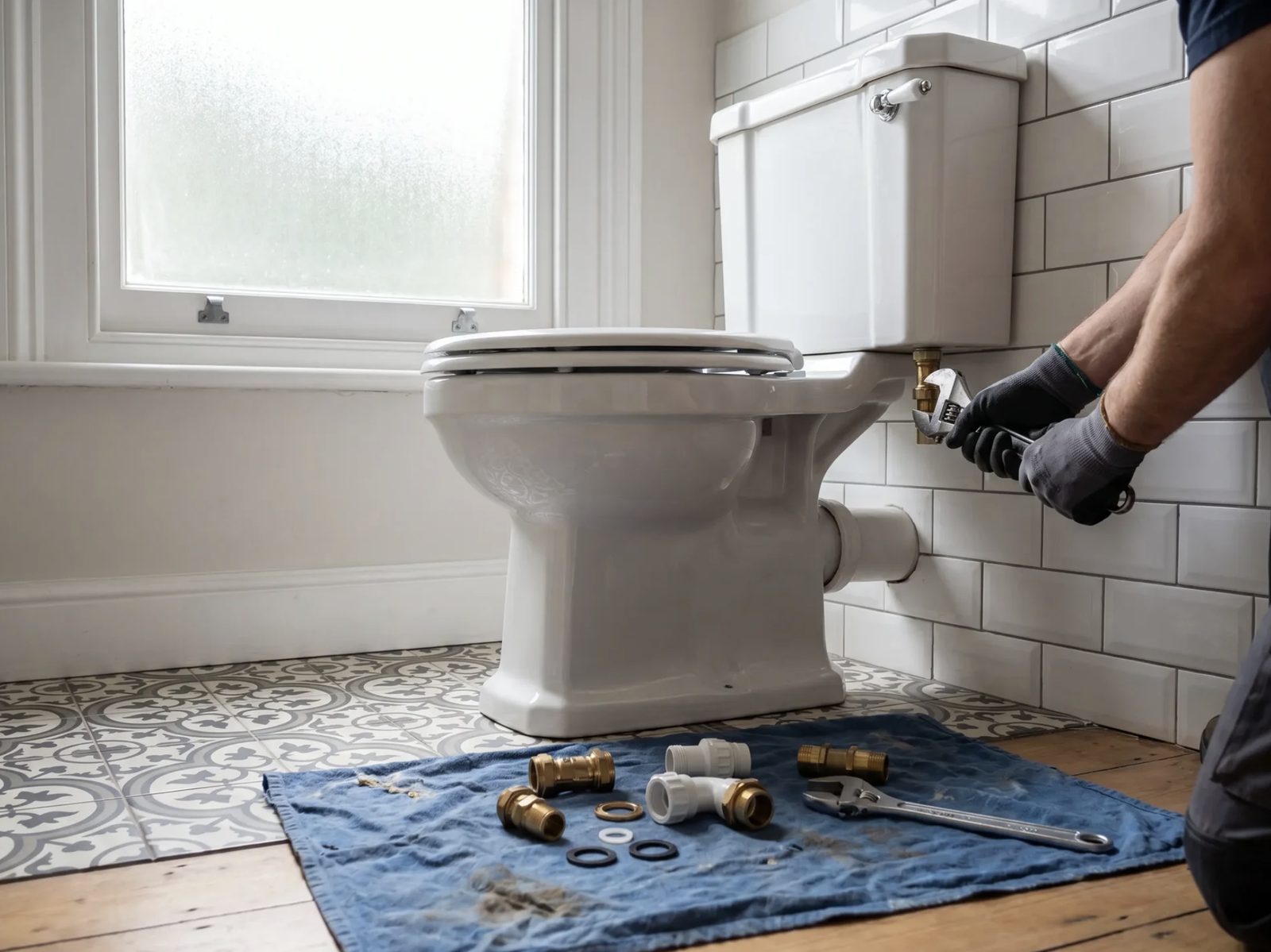
Older float-arm valves can often be adjusted — bend the arm down or turn the adjustment screw so the valve shuts off below the overflow level. Modern plastic fill valves have a level adjuster, but once they start hissing or refusing to close, replacement is usually simpler than repair. Fill valves are inexpensive and standardised.
Flush valve and seal problems
The rubber or silicone seal at the bottom of the flush valve hardens and distorts with age (and faster in hard water areas). Limescale or debris on the seat stops it seating cleanly. Cleaning the seat sometimes buys time; replacing the seal or the whole flush valve is the proper fix. On button-flush toilets the mechanism drops out once the cistern is disconnected — fiddlier, but routine.
Concealed and push-button cisterns
Toilets with cisterns hidden behind tiling or furniture are serviced through the flush-plate opening — the plate unclips to give access. It's tight work, but no tiles need to come off in the vast majority of cases. If your concealed toilet is running, don't let anyone convince you the wall has to be opened before it's even been inspected.