A blocked sink is one of the most common plumbing problems in any UK home — and one of the few you can often fix yourself before reaching for the phone. The right method depends on what's causing the blockage: fat and food in kitchen sinks, hair and soap scum in bathrooms.
Work through these methods in order. They start gentle and get more involved, so you'll fix most blockages with minimal effort and mess.
1. Boiling water (kitchen sinks)
If water is draining slowly rather than not at all, boiling water is the simplest first move. Fat and grease from cooking solidify inside the pipe; a full kettle poured slowly down the plughole can melt minor build-ups. Repeat two or three times. Avoid this on ceramic sinks with a cold basin (thermal shock can crack them) and skip it entirely if your waste pipes are old and fragile.
2. Bicarbonate of soda and vinegar
Pour half a cup of bicarbonate of soda down the plughole, follow with a cup of white vinegar, cover with a cloth for ten minutes while it fizzes, then flush with hot water. The reaction helps break down organic gunk. It won't shift a solid blockage, but it's excellent for slow drains and smells.
3. Use a plunger properly
Block the overflow opening with a wet cloth (this is the step everyone misses — without it you lose all your pressure), add enough water to cover the plunger cup, and plunge with steady, vigorous strokes for 20–30 seconds. The seal matters more than the force.
4. Clean the U-bend (trap)
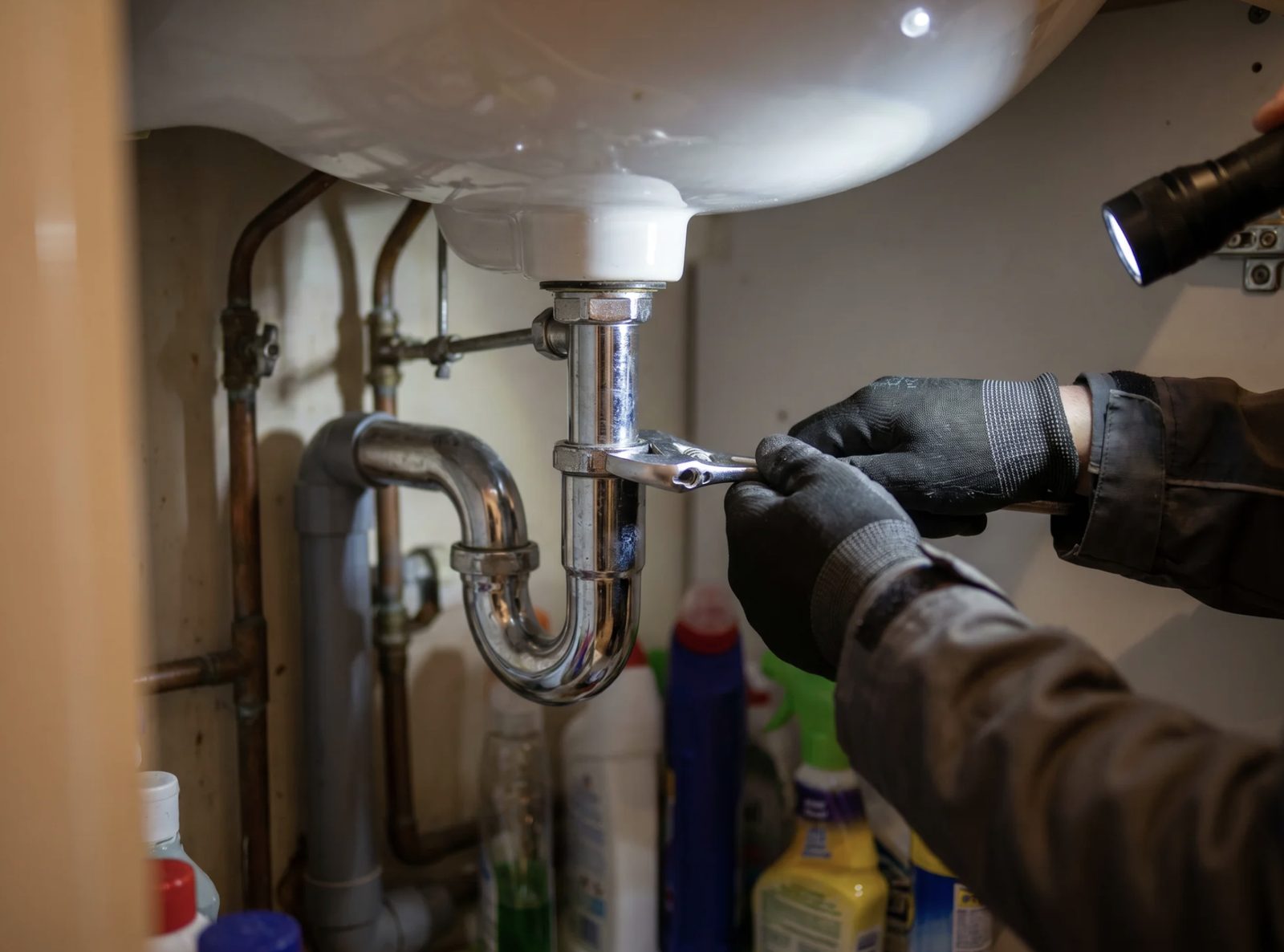
Most sink blockages live in the U-shaped trap directly under the plughole. Put a bucket underneath, unscrew the two connectors by hand (they're designed for it), and empty out the debris. Check the washers are seated properly when you refit it, then run water to check for drips.
5. A drain snake or wire
For blockages beyond the trap, a cheap hand-held drain snake from any DIY shop will reach further down the waste pipe. Feed it in, twist to hook the blockage, and pull it back out. A straightened wire coat hanger works in a pinch for hair near the plughole.
6. When to call a plumber
If the blockage keeps returning, affects more than one plughole, or you can hear gurgling from other drains when the sink empties, the problem is further down the system — possibly the main waste run or outside drain. That needs professional equipment: mechanical augers, high-pressure jetting, or a CCTV survey to find the real cause.