Hot at the top, stone cold across the bottom — it's one of the most common heating complaints in the UK, and the diagnosis is almost always the same: sludge. (Cold at the top is the opposite problem — trapped air — and that one you can fix in two minutes with a bleed key.)
Here's what sludge actually is, why it settles where it does, and what genuinely fixes it.
What is central heating sludge?
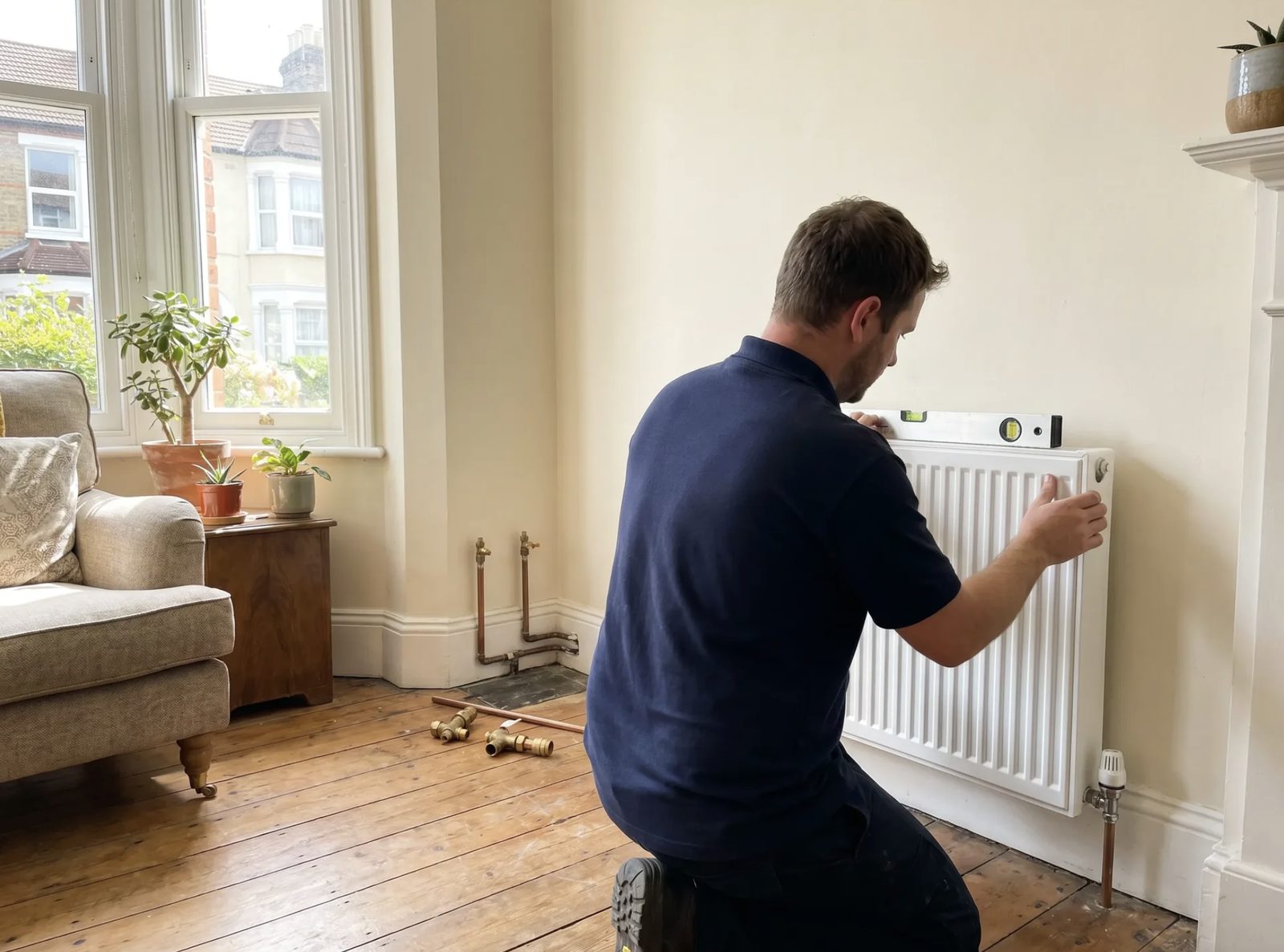
Sludge — engineers call it magnetite — is a black, muddy mixture of rust particles and debris created as the water in your system slowly corrodes the inside of steel radiators and fittings. It's heavier than water, so it settles at the lowest point of each radiator, blocking the flow of hot water across the bottom section. The radiator's top gets hot; the bottom stays cold; the room never quite warms up.
Why it matters beyond comfort
Sludge doesn't stay in radiators. It circulates through the boiler's heat exchanger and pump, causing kettling noises, breakdowns and premature boiler failure. Boiler manufacturers can void warranties if a system is heavily contaminated. A sludged system also costs more to run — you're burning gas to heat radiators that can't release the heat.
The fix: powerflushing
A powerflush connects a pumping unit to your heating circuit and drives cleaning chemicals through every radiator and pipe at high velocity, dislodging and flushing out the sludge. A typical house takes half a day to a day. Afterwards the system is dosed with inhibitor chemical and often fitted with a magnetic filter to catch future debris before it reaches the boiler.
Cheaper alternatives (and their limits)
For one mildly affected radiator, removing it and hosing it through in the garden can work. Chemical cleaners added to the system and left to circulate help with light contamination. But for widespread cold spots, only a powerflush shifts the volume of settled sludge — and it protects the expensive part of the system: the boiler.
Prevention
Inhibitor fluid should be checked and topped up whenever the system is drained, and a magnetic filter is one of the best-value additions to any heating system — it catches magnetite continuously and takes minutes to clean at the annual boiler service.