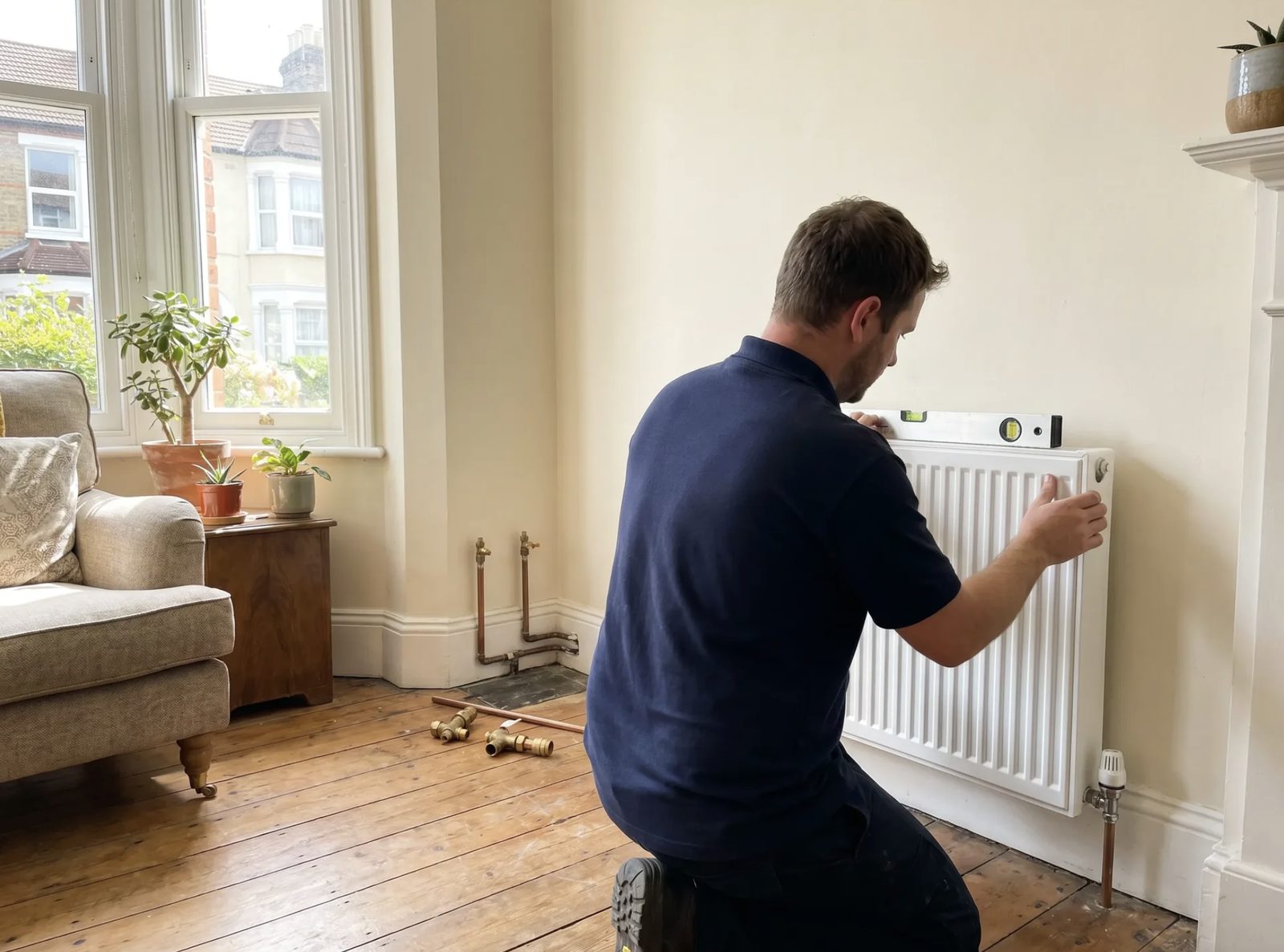
A radiator that's cold at the top but warm at the bottom has trapped air sitting where hot water should be. Bleeding — releasing that air through the small valve at the top corner — takes two minutes and needs one cheap tool: a radiator bleed key (or a flat screwdriver on modern valves).
Here's the right way to do it, including the steps people skip.
Step 1: Heating off, radiators cool
Turn the heating off and let radiators cool. Bleeding with the pump running can draw more air in, and bleeding hot radiators sprays hot water. Patience first.
Step 2: Find the bleed valve
It's the small square-ended valve at one top corner of the radiator, often inside a round collar. Have your bleed key and a cloth ready, and something to catch drips — the water that comes out is often filthy.
Step 3: Open a quarter to half turn
Insert the key and turn anticlockwise slowly — a quarter turn is usually enough. You'll hear a hiss as air escapes. Don't open it further; you're venting, not dismantling.
Step 4: Close when water appears
The hiss will fade and a steady dribble of water will appear — that means the air is out. Close the valve snugly (firm, not gorilla-tight). Wipe up, because heating water stains.
Step 5: Check the boiler pressure
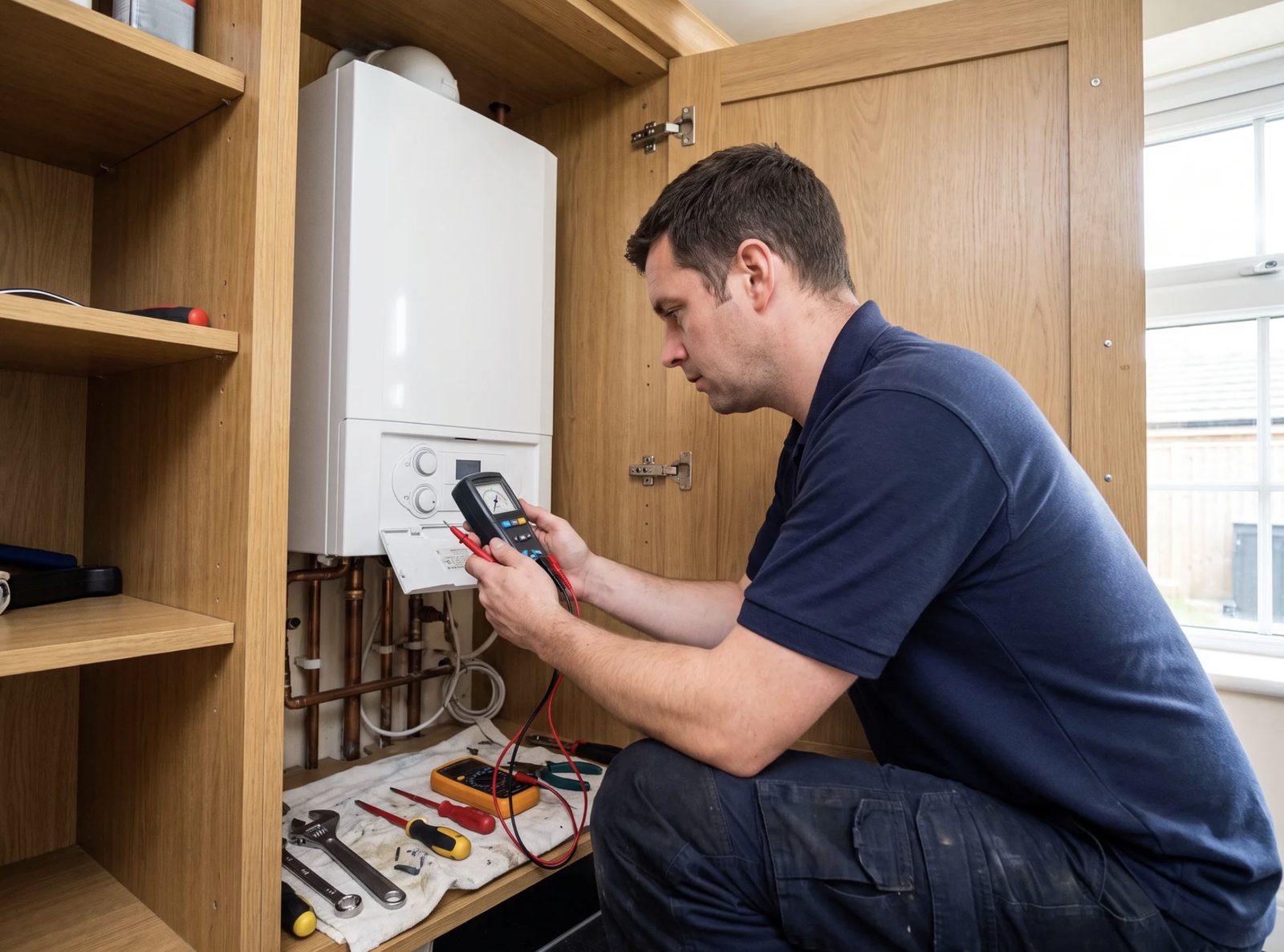
This is the step everyone forgets. The air you released was occupying space in a sealed system; pressure will have dropped. Check the boiler gauge and top up via the filling loop to around 1.2 bar if needed — otherwise the boiler may lock out and you'll think bleeding broke it.
If bleeding doesn't fix it
Radiators that need bleeding every week have air getting in from somewhere — often a failing pump seal, a leak drawing air in, or corrosion generating hydrogen gas (a sign of missing inhibitor). Cold at the bottom rather than the top is sludge, not air, and needs a different fix entirely. Both are worth a professional look before winter.