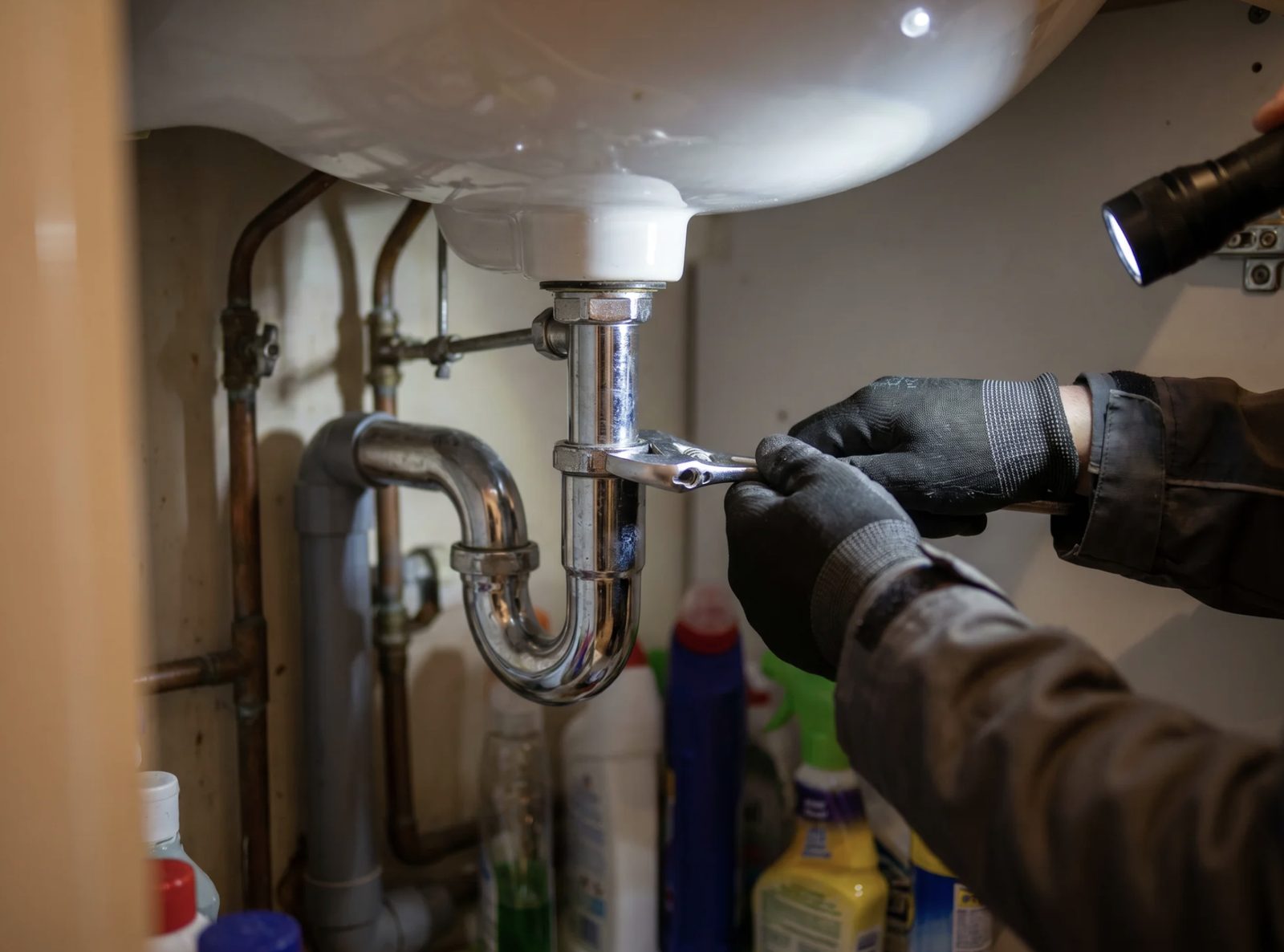
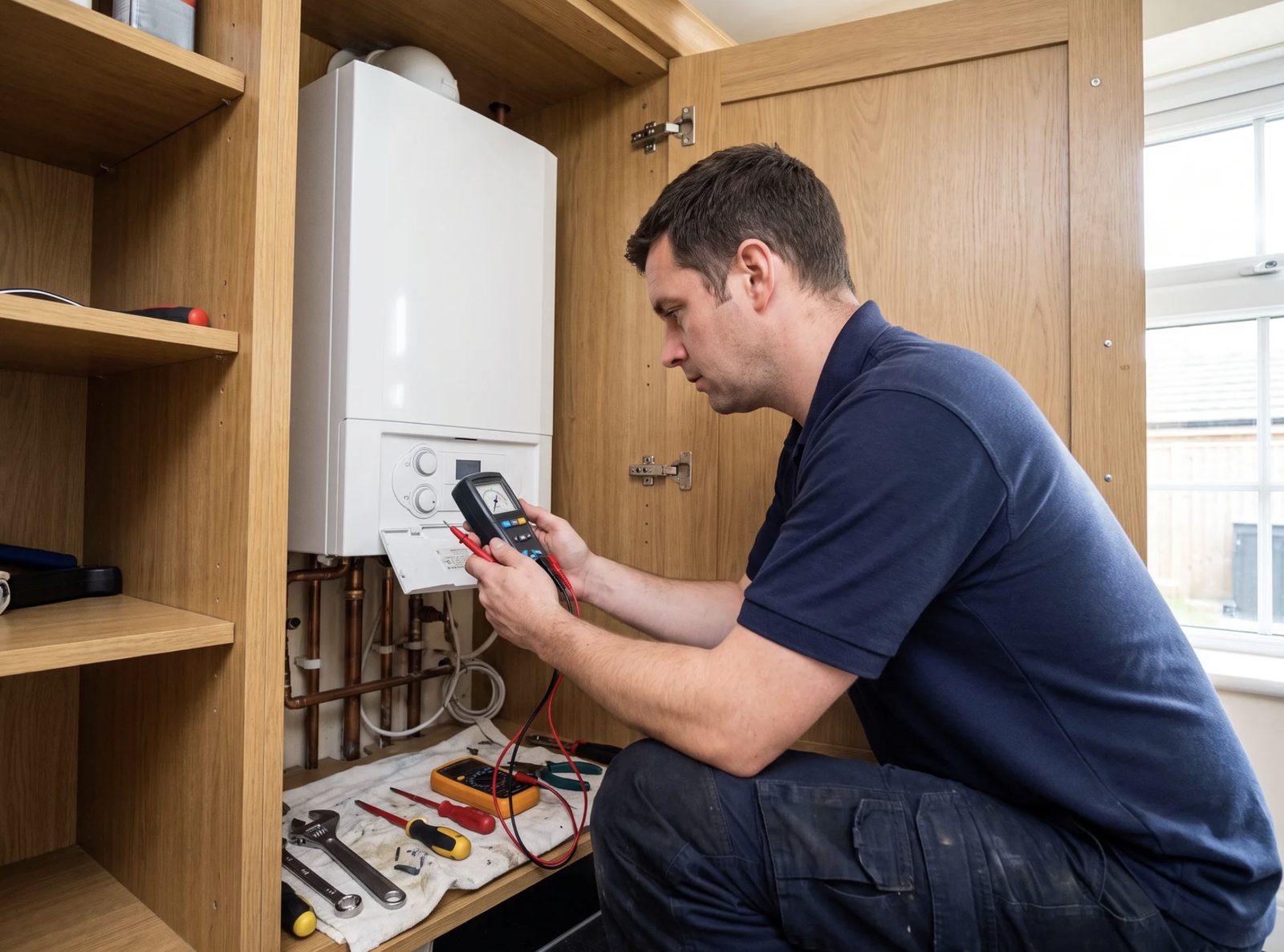
Low water pressure is a diagnosis that starts with one question: is it one outlet, or the whole house? Answer that, and you've already narrowed the cause by half.
Here's how to trace weak flow to its source — and what actually fixes each cause.
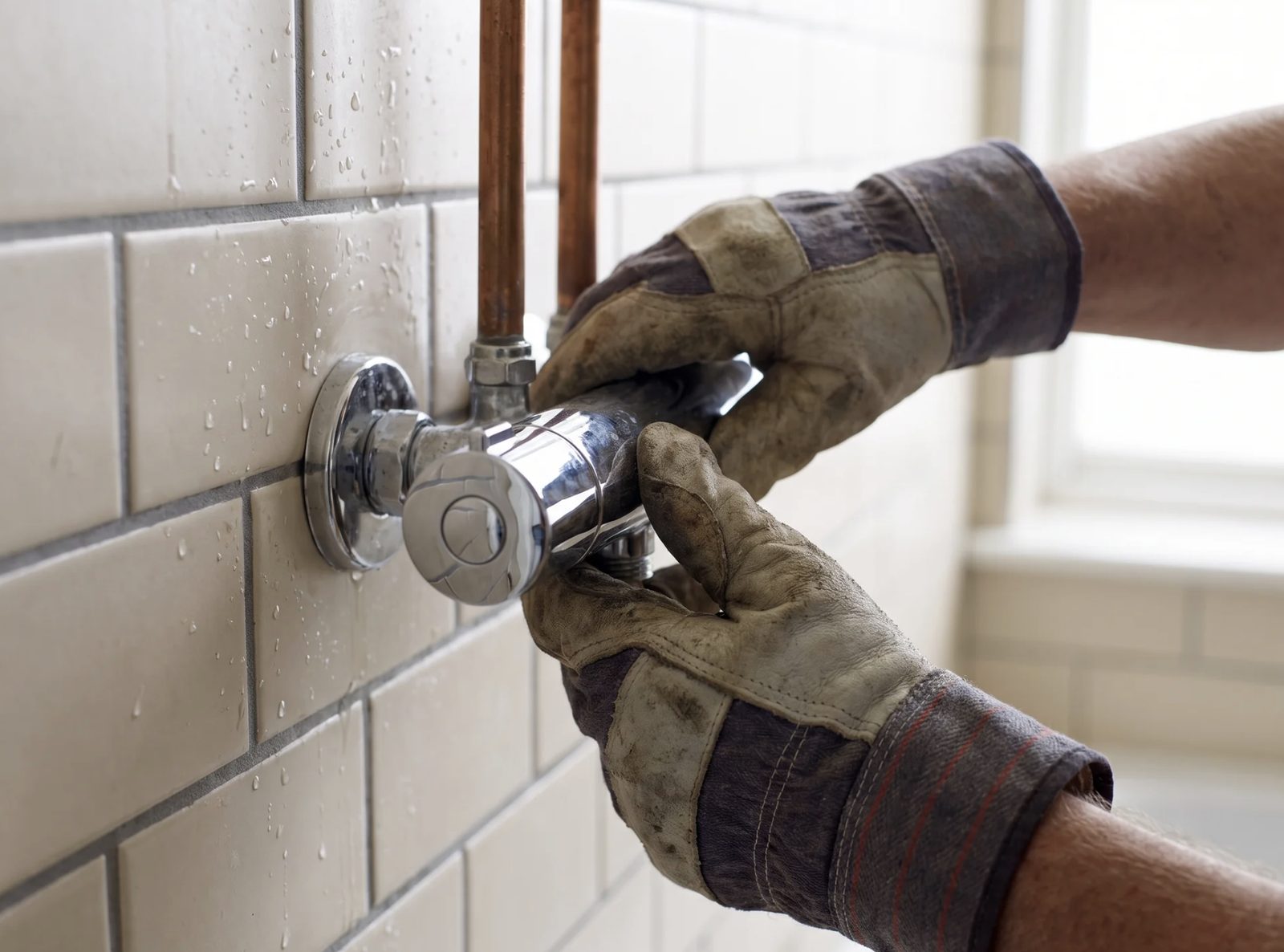
One tap or shower is weak
If everything else runs fine, the problem is local. Unscrew the tap aerator or shower head and look — limescale and grit block them constantly, especially in hard water areas. Check any isolation valve on that outlet's pipe is fully open (a half-closed screwdriver-slot valve is a remarkably common culprit after past work). Flexi hoses under sinks can also kink or degrade internally.
The whole house is weak — and always has been
Chronic low pressure usually comes down to the supply: an old, narrow or partially corroded supply pipe from the street (common in pre-1970s homes with original galvanised or lead pipes), or simply a low-pressure area. Your water company must supply a minimum standard (typically 1 bar at the boundary) — they'll test it free if you ask. Upgrading the supply pipe to modern 25mm MDPE transforms flow in older houses.
The whole house is weak — but it's new
Sudden whole-house pressure loss suggests a partially closed stopcock (check it's fully open — turn fully on then back a quarter), a leak on your supply pipe (is the ground outside damp? Is the meter moving with everything off?), or works in the area. Check with neighbours: if they're affected too, it's the network, not your house.
Weak showers specifically
Shower performance depends on your system type. Gravity-fed systems (tank in loft) have inherently low pressure — a shower pump is the transformative fix. Combi systems rely on mains flow; a scaled heat exchanger or an undersized combi throttles hot flow. Fitting a shower designed for your pressure level matters more than the price tag on the box.
What about a pressure booster?
Whole-house pumps and accumulator tanks can legally boost mains-fed homes within limits (pumping directly from the main beyond 12 litres/min is restricted by water regulations). It's a proper solution for chronically weak mains — but diagnose first: boosting a supply throttled by a corroded pipe is treating the symptom.