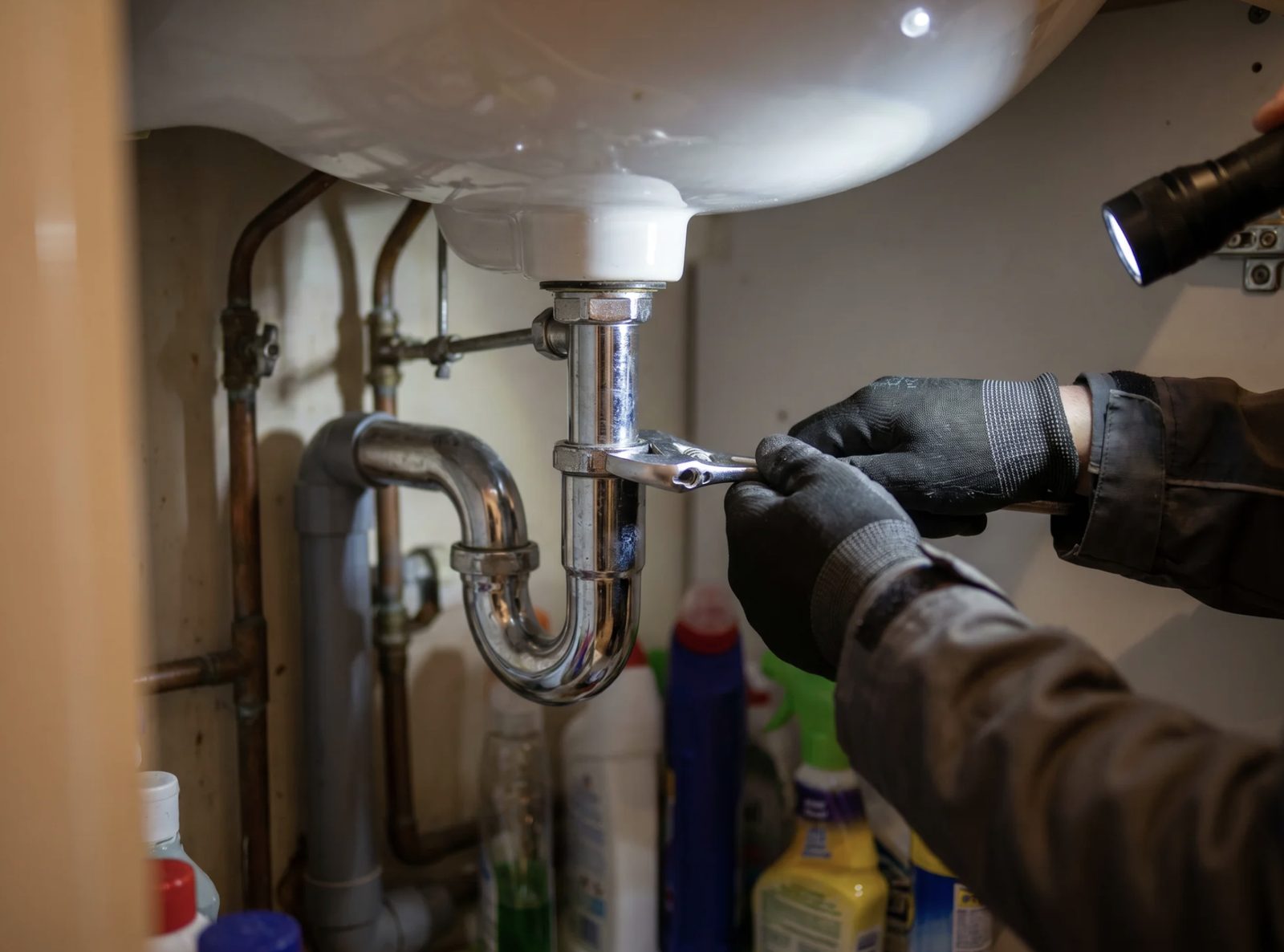
Few household failures are felt faster than no hot water. Before you book an engineer, five minutes of checks can either restore it yourself or tell you exactly what to report — which often means a faster, cheaper fix.
Work through this list in order. It's roughly sorted from most-likely-and-free to needs-an-engineer.
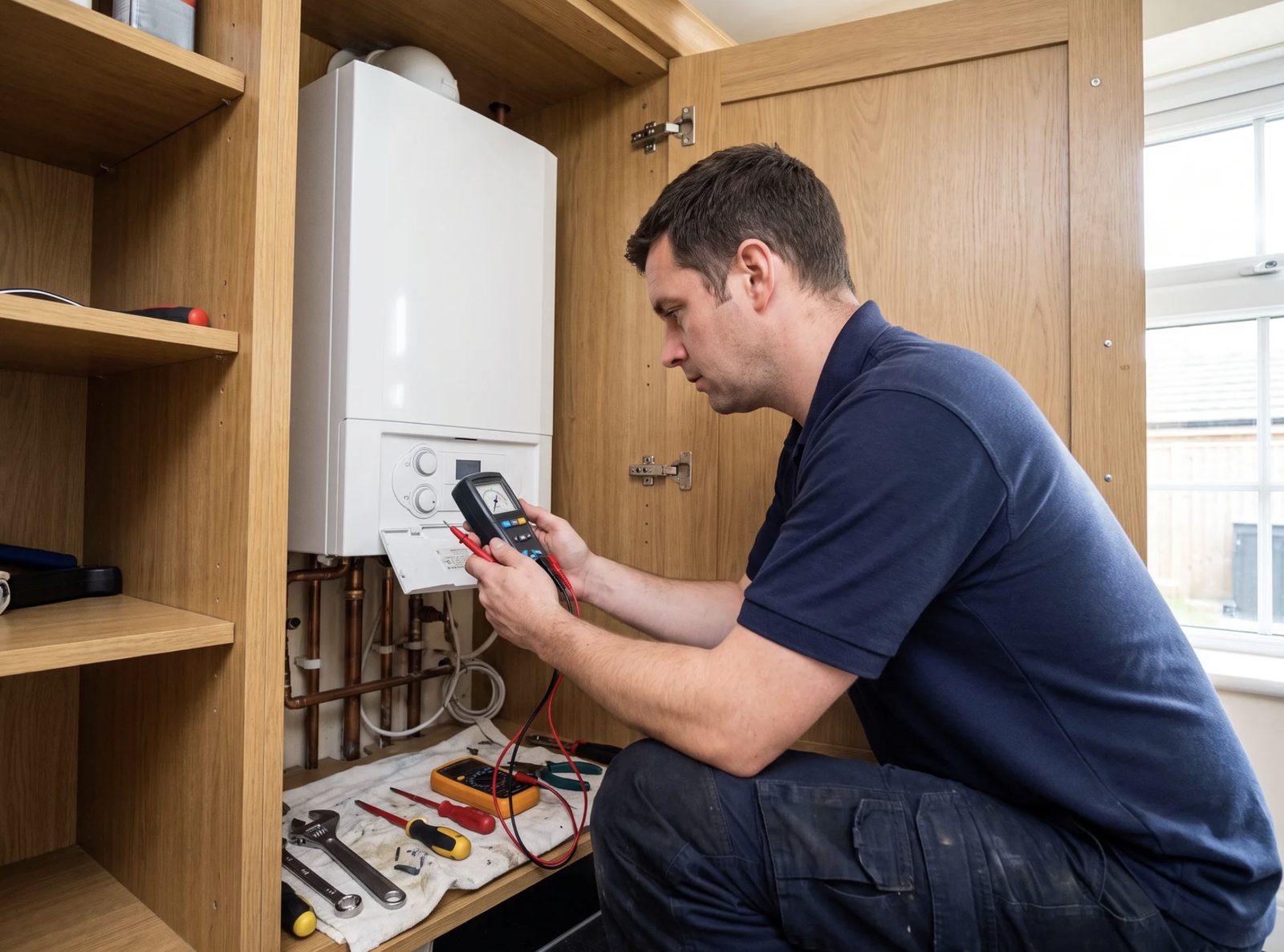
1. Check the obvious controls
Programmer schedules get knocked, thermostats get turned down, and 'holiday mode' gets enabled by accident more than anyone admits. Confirm the hot water is actually calling for heat and the boiler's water temperature dial isn't at minimum.
2. Check the boiler pressure
If the gauge reads below about 0.8 bar, most boilers lock out. Re-pressurise via the filling loop to around 1.2 bar and see if the boiler fires. If pressure keeps dropping, read our guide to boilers losing pressure — there's an underlying cause.
3. Look for error codes
A flashing display code identifies the fault family instantly — ignition failure, pump fault, sensor error. Note the code and check the manual or the manufacturer's site; tell us the code when you call and we can often arrive with the right part.
4. Is the heating working but not hot water (or vice versa)?
On a combi, hot-water-works-but-heating-doesn't (or the reverse) points strongly at the diverter valve — the internal valve that switches between the two. A sticking diverter is one of the most common combi faults, especially over summer when the heating side sits unused.
5. Frozen condensate pipe (winter)
In freezing weather, the white plastic condensate pipe running outside can freeze and block, shutting the boiler down (often with a gurgling noise and a specific error code). Thaw it with warm water and the boiler usually resets. Lagging the pipe prevents repeats.
6. Cylinder systems: check the immersion and thermostat
If you have a hot water cylinder, check the cylinder thermostat setting (around 60°C) and, if the boiler side has failed, the immersion heater can often provide backup hot water via its own switch. An immersion that's stopped working may just need its thermal cut-out resetting — a small red button under the top cap (power off first).
7. No gas?
Check the gas hob lights. If nothing gas works, the issue is supply — check your meter (top-up meters run out; smart meters can be accidentally disabled) before assuming the boiler is at fault.
8. Time for an engineer
If the above hasn't restored hot water, you're likely looking at a component fault: diverter valve, ignition parts, pump, sensor or printed circuit board. All routine repairs for a Gas Safe engineer — and describing what you've checked already will speed everything up.