The most damaging leaks aren't the dramatic ones — they're the slow, hidden ones that run for months inside a wall or under a floor, quietly rotting timber and feeding mould. By the time they show themselves, the water damage bill often dwarfs the plumbing repair.
These seven signs catch hidden leaks early. If two or more sound familiar, it's time to investigate.
1. The water meter test
The definitive check. Turn off every tap and water-using appliance, note the meter reading, wait 30–60 minutes without using water, and read it again. Any movement means water is escaping somewhere. (Many meters have a small leak-detection dial that spins with even tiny flow.)
2. An unexplained jump in your water bill
If your usage habits haven't changed but the metered bill has climbed, believe the meter. Compare against the same period last year rather than last month — usage is seasonal.
3. Damp patches, stains or peeling paint
Brown ceiling rings, bubbling paint, lifting wallpaper and skirting-level damp are water announcing itself. The stain is rarely directly below the leak — water travels along joists and pipes before dropping — which is why proper tracing beats guesswork demolition.
4. Musty smells and mould
A persistent musty smell in one room, or mould appearing in a spot with no condensation explanation, means moisture with a constant source. Mould that returns days after cleaning is being fed by something.
5. The sound of running water
Hissing or trickling with everything off — especially at night when the house is silent — is a live leak. Pressed against the wall, a simple stethoscope (or even a glass) can help localise it, but this is really the moment to call a professional.
6. A warm patch on the floor
A mysteriously warm section of floor usually means a leaking hot water pipe below. Bonus symptom: the boiler firing or the hot water 'running out' faster than it used to, because heated water is literally draining away.
7. Boiler pressure that keeps dropping
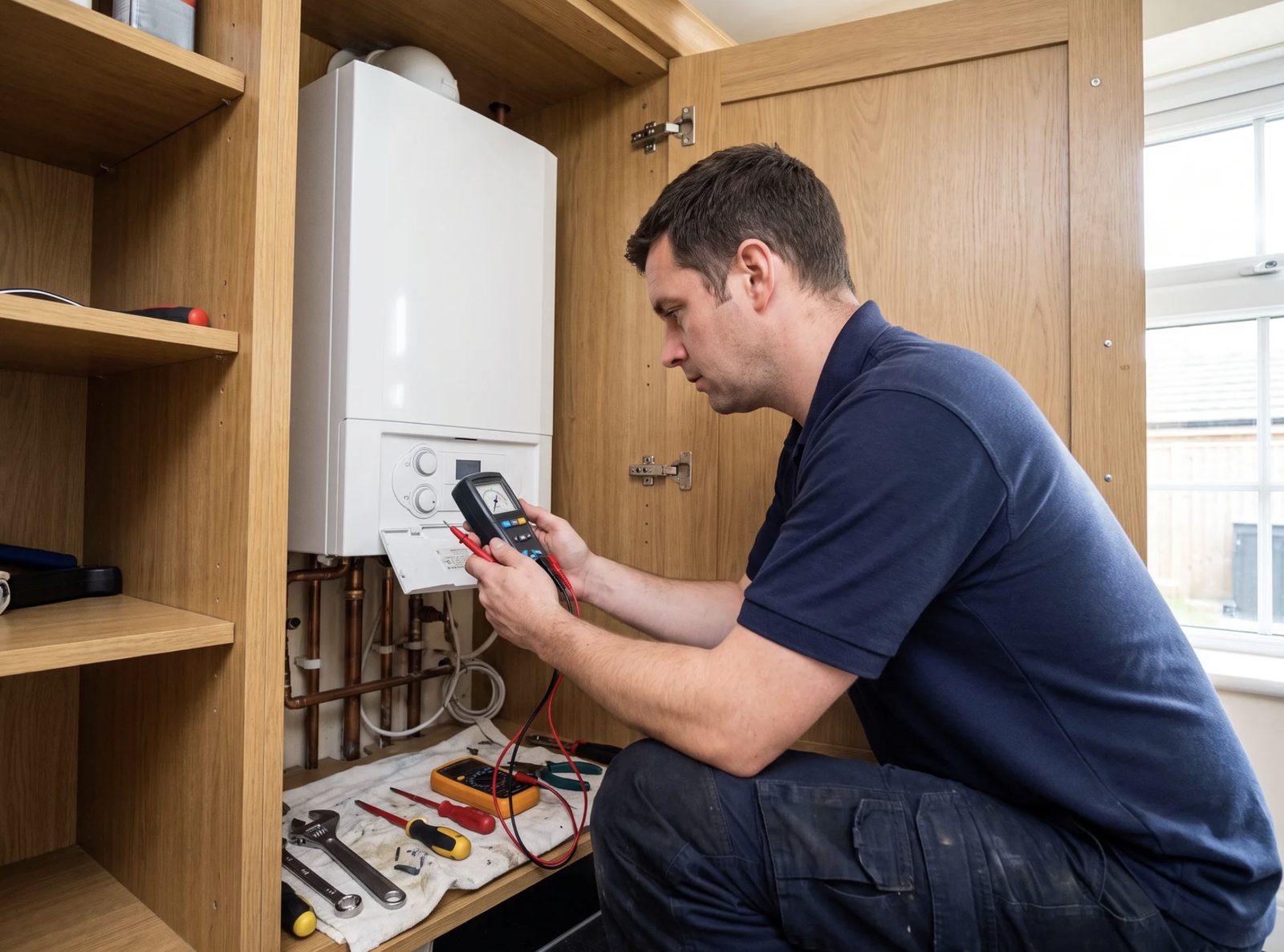
Sealed heating systems shouldn't need constant topping up. If yours does and there's no visible drip at any radiator, the leak is likely in the pipework under floors — heating leaks are among the most commonly hidden.
How professionals find leaks without wrecking your home
Modern leak detection is about isolation and testing, not exploratory demolition: pressure-testing individual circuits, isolating sections, and targeting the known weak points of each pipework era. The result is a repair through one small, deliberate opening instead of a trail of holes. Most home insurance includes trace-and-access cover for exactly this work — check your policy before assuming you'll pay out of pocket.